
Week 6 - MBA 6101 - Google Ads: The Next Step to Profits


When starting an advertising campaign it can be hard to know where to start. To get the word out there on your small business, one easy and legitimate option is using Google Ads. Once you have arrived at the website, you simply click the "Start Now" button and follow the step by step guide, starting with adding your website URL.


From there, you will have the opportunity to tailor your advertising campaign to achieve your specific goals, whether that is increased sales or just increased website traffic or phone calls. Even the goals align with the concept of Guerilla Marketing, as described by Jay Conrad Levinson. Once you have chosen your goals, you will be directed to a page where you can write your campaign. This includes multiple headlines, which will link to searches by Google users, as well as some guided content for the ad. This appears to have been pre-populated based on the content of my website, which makes it even easier for the user to either accept the text as is or edit to fit their purposes.
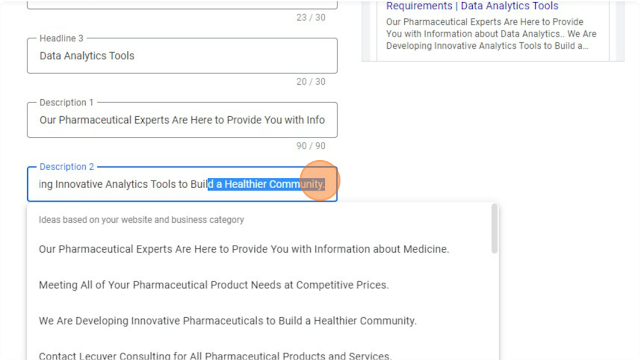


Once the ad is written, you are ready to select the area in which you want to advertise. I chose to advertise in the United States, and more specifically in my area where I know there are several target companies that would benefit from my consulting services. Finally, you set your budget for the advertising campaign. I chose the lowest pre-populated option, which was $5.20 per day maximum.


And there you have it, as simple as that a new ad campaign has been started. Now all that was left was to wait and see the metrics on how successful this advertising campaign would be!




After a week, the numbers are in! Overall this campaign out performed the initial expectations of 60-130 clicks each month, according to the budget chosen. In a little under a week, the advertising campaign had already received 42 clicks from potential customers throughout the United States. 


Most of the 2,613 views were between February 22nd and February 24th, with about half of the views coming from desktop computers rather than mobile devices. Additionally, the target audience appeared to have been between the ages of 25-34. This information could then help the user tailor their campaign even further to ensure they are hitting their target audience. Overall, I am very happy with these results and will likely use Google Ads if I ever decide to move forward with consulting activities.


Comments

Popular posts from this blog

Week 8 - MBA 6101 - Guerilla Marketing Techniques in the Pharmaceutical Industry

In chapter 8 of Guerilla Marketing , Jay Conrad Levinson discusses how to make your marketing efforts stand out and get noticed in a crowded marketplace. It's about thinking outside the box and being creative with your messaging, tactics, and strategies to grab the attention of your audience. When it comes to the pharmaceutical industry, there are many challenges to marketing drugs and medical devices. The industry is heavily regulated, and there are strict guidelines that must be followed when promoting pharmaceutical products. However, this doesn't mean that there isn't room for creative marketing tactics. In fact, in some cases, guerilla marketing techniques can be highly effective in the pharmaceutical industry. One way to use guerilla marketing in the pharmaceutical industry is by focusing on education and awareness. Instead of simply promoting a drug or medical device, you can create content that helps people understand the condition or disease that the product is i...

Week 7 - MBA 6101 - Artificial Intelligence and Machine Learning Impacts on the Pharmaceutical Industry

Health IT Analytics posted the article  ChatGPT Passes US Medical Licensing Exam (USMLE) Without Clinician Input  in February of this year. With this news, questions arose in my mind about how Artificial Intelligence (AI) and Machine Learning (ML) may impact the job market of the pharmaceutical industry. While the artificial intelligence tool scored only 60% accuracy on the exam, it does beg the question will clinicians soon no longer be required for safety data review and analysis in clinical trials or pharmacovigilance? In my own experience, medical decisions surrounding pharmaceuticals requires the ability to critically think about the reported data and understand the medical impact that may be had. This can be made difficult by poor data entry by the primary investigator delivering medical care the the subjects on the clinical trial. It can also require extensive knowledge of the pharmacokinetics of the drug under study. For this reason, I do not think we all need to ...

Week 5 - MBA 6101 - Marketing in the Age of Artificial Intelligence

Advertising and marketing have come a long way since the days of print ads and radio jingles. Today, the rise of artificial intelligence (AI) is transforming the industry, enabling companies to deliver highly personalized, data-driven marketing campaigns that connect with consumers on a deeper level than ever before.  In this blog post, we'll explore the impact of AI on advertising and marketing, and how businesses can leverage this technology to create more effective and engaging campaigns. What is Artificial Intelligence? Artificial intelligence refers to the simulation of human intelligence in machines that are programmed to think and act like humans. AI technologies include natural language processing, machine learning, and computer vision, among others. These tools allow machines to learn from data, make predictions, and perform tasks that would typically require human intervention. AI in Advertising and Marketing The use of AI in advertising and marketing has revolutionized t...